Articles Written by Miss Marcy
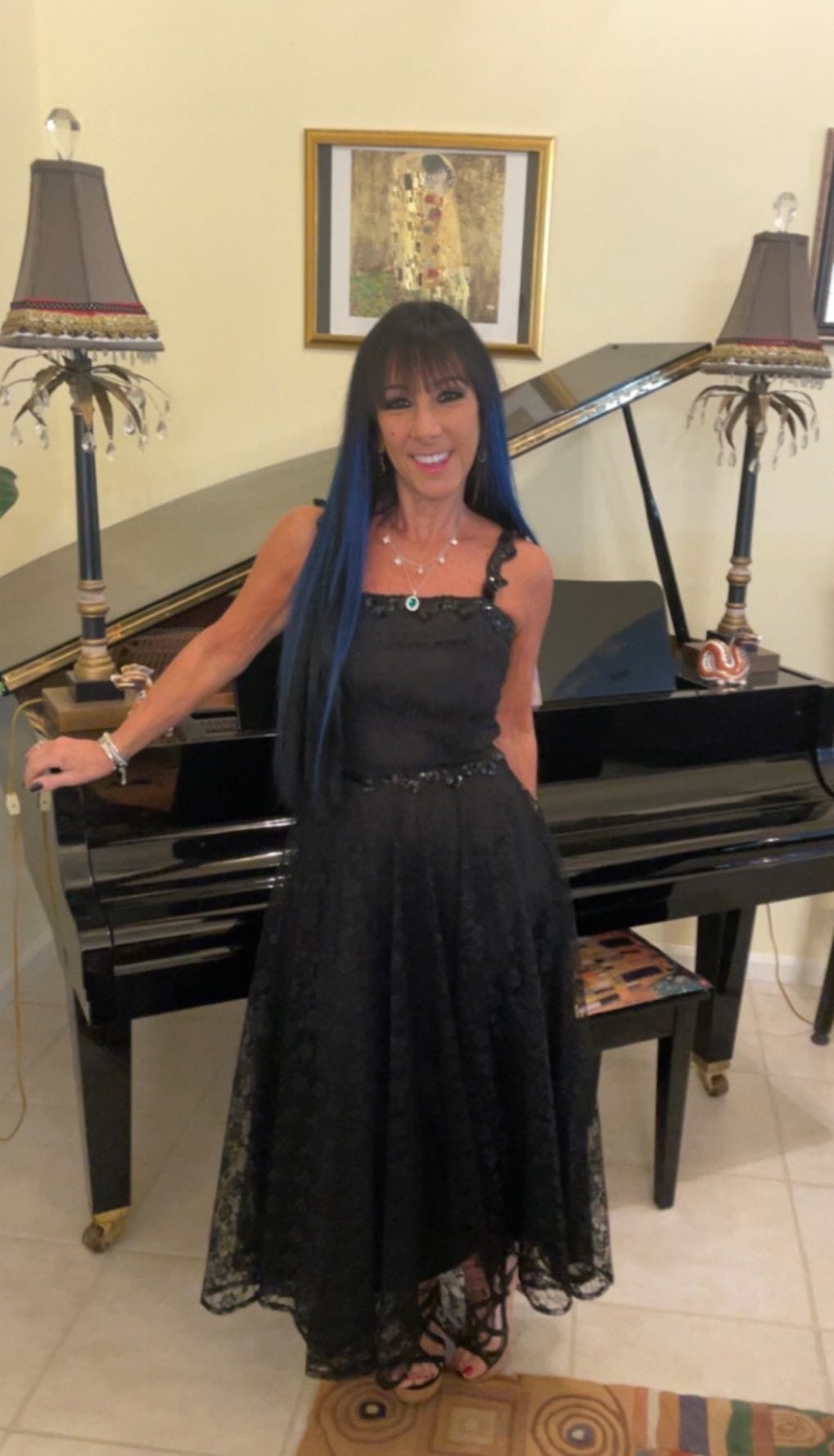
Playing the piano is immensely beneficial in supporting and enhancing children’s focus. Problems in the classroom and socially tend to develop so often due to issues with a lack of focus. This can also become a source of teasing of peers, and unacceptable behavior in the classroom, resulting in teacher’s “pegging” the child as an underachiever, which then becomes a self- fulfilling prophesy. These children are not guilty of being incapable of concentrating. Instead, these kids simply cannot find a way to get interested in their schoolwork or activities unless the teacher makes extreme attempts to reach them on their own level. And based on classroom sizes, most teachers do not have the time to reach out to those children who do not “fit “the mold. These children, therefore, often get “lost,” and fall behind in the classroom, which later impacts their self-confidence, and ultimately, their adult lives and careers. While it is up to the teacher to bring the learning to these kids, despite the fact that most teachers do not have the time to devote to these students, the other issue is that these children will not step up and ask the teacher for instruction unless they feel secure. And children with these gifts do not feel secure. This is perhaps due to the fact that they feel insecure about all the other things that are more difficult for them, from reading to following directions. What is required is a teacher who employs unconventional methods with a Socratic style of teaching, who is patient enough to find ways to deal with the tremendous energy of ADHD children, and then find a useful channel for it. A Prelude to the Classics Music Academy has developed games and systems in both fun groups and individual sessions which have proven results in assisting gifted children in their development – socially, and educationally in a classroom setting. According to the Foundation for Universal Music Literacy Research Materials: Piano Lessons Help Children in School The most talked about benefit children receive from piano lessons is that it also helps with their school lessons. Numerous studies available show children who play the piano score higher on both standard and spatial cognitive development tests alike. There are also findings that show scores higher in math, especially on problems dealing with ratios and fractions. In one particular study conducted by Dr. Frances Rauscher (a psychologist at the University of Wisconsin at Oshkosh) and Gordon Shaw (a physicist at of the University of California at Irvine) preschoolers taking piano instruction were tested. They found that these preschoolers who received piano lessons scored 34% higher than their nonmusical counterparts in tests measuring spatial-temporal reasoning, which is the brain function used to understand math, science, and engineering. Piano Lessons Raise Self-Esteem Learning to play the piano is challenging work and takes dedication. Not only does each song mastered increase a child's self-esteem, but showcasing their newly learned talents at piano recitals can boost their self-esteem as much as winning a game in a sports competition. Lessons also help kids to learn how to keep a positive outlook when facing difficult tasks. The understanding that mastering a new skill is a process that requires patience helps children to approach tasks with confidence, and not become discouraged or frustrated. Piano Lessons Increase Coordination Increased eye-hand coordination is almost a given for children that learn to play the piano. Kids who play the piano have improved fine motor skills and, unlike other instruments, the piano requires both hands to work independently of each other, one moving fast while the other may be moving at a slower rate. All of these elements help to increase a child's overall dexterity and complex thought processes. Piano Lessons Help Children to Concentrate Reading a piece of music takes a great deal of focus, enabling a child to interpret a note and a rhythm, translate it into hand movements on the keyboard, and then immediately go on to the next piece. Reading and playing music allows these children to think both critically and creatively, which is a skill that will assist them in anything they choose to undertake in the future. Piano Lessons Help Children to be Well-Rounded. Regardless of whether a child plays the piano for a short time or for a lifetime, the long-term effects of their pursuance of piano lessons are astounding. Through playing the piano, children are exposed to classical music that they may otherwise have never heard. Kids may develop an appreciation for composers including Bach or Mozart that will remain with them throughout their lives. The skills and knowledge they learn in taking piano lessons may help them easily pick up another musical instrument, further broadening their musical enjoyment and learning enhancement. Learning to play the piano advances the physical, mental, emotional, and social development of students. It improves listening skills, art enrichment reaching comprehensions and the ability to deduce themes and symbolism. Piano lessons promote self-esteem and self-confidence, and resultantly reduce school behavioral issues and severe discipline problems. Notably, college music majors account for the majority of those admitted to medical school. Children are considered gifted when their abilities are significantly above the norm for their age. Giftedness can manifest itself in a plethora of venues, including intellectual, creative, artistic, leadership, or in a particular academic field of study, such as language arts, mathematics, or science. While being gifted may be present in a variety of demographics, it is also based on personality type and can be classified as learning disabilities. Intellectually gifted students often have learning disabilities, and frequently, the two go hand in hand. Statistics reveal that 14% of gifted students, which in itself represent 4% of the population, are also learning disabled, which is categorized as ‘Twice-Exceptional’ learners, or those on the ‘Spectrum’. The actual numbers of students in this classification throughout the U.S. is estimated at approximately hundreds of thousands. The twice –exceptional students are very easily overlooked, and consequently they are left on their own to handle their schoolwork without any special services or obtain the stimulation required for their achievements. These students tend to score high on standardized tests for giftedness, however, they often do not achieve exceptional, or even moderate status in gifted programs. Instead, these students typically are labeled as “underachievers,” or “lazy,” and therefore do not stand up to their gifted peers in these programs. In addition, these particular students, while performing exceptionally high on standardized tests may not perform well and they are then placed with “special needs” students, who are not intellectually gifted, and thus, they are not challenged with the scholastics in these programs. Others are often identified as having emotional issues. Unfortunately, often these students give the impression of being average in ability, as their strengths and weaknesses with regard to their exceptional intelligence, combined with their behavior, tend to cancel themselves out, and ultimately, these students do not qualify for gifted programs on that basis. The “twice-exceptional” student typically portrays extraordinary talent in a particular area, often math, drawing, verbal communication, or music. The most common types of these twice-exceptional students include autism spectrum disorder, where the student focus on a small item, can handle one task at a time, are awkward with their speech and around others, have impaired speech and are often loud, and have some peculiar voice qualities and speech. Also, these students tend to be preoccupied with a specific item, interest, or issue. Other types of twice exceptional students include ADD, ADHD, and Dyslexia. Oppositional Defiant Behavior, which is rarer, is evident in 1% to 16% of school age children, and it is generally seen in conjunction with ADD or ADHD. Here, the student has an ongoing pattern of uncooperative behavior, and hostile behavior toward authority figures. The Academy recognizes the challenges associated with teaching these students on the Spectrum. The Academy has developed successful methodologies and specific strategies to teach piano, and music theory the twice exceptional student. 100% of the students in my Academy as “gifted”, intellectually. Over 70% of the students in my Academy are considered on the Spectrum, or Twice Exceptional; they have either been identified by the school, or a professional psychiatrisy. The Academy was established in 2009. It focuses on a specific niche of students – the highly gifted student, with specific regard to their IQ. This niche was developed based on the demographics of the geographic region of the Academy –South Florida. The socio-economic area is considered well above average with respect to the family income, family’s higher level of education, and status in the community. Early on during the establishment of the Academy, I recognized the uniqueness of each and every student, as well as the commonality of the students. It rapidly became noticeable that each student was intellectually capable of learning advanced level music, including the reading of notes in several clefs, a difficult task for any student, learning music theory, and the art of playing the piano. This was the commonality of the students. However, many distinguishing differences quickly appeared. I noticed one student had a sincere love for playing the piano, yet was easily distracted by any number of outside issues, including a bird chirping outside the window, and then leaving the piano to observe the bird, an airplane over head and looking out the window to decipher what type of plane was flying, a fire truck outside blowing its horn, a siren, someone mowing the lawn. Another student would consistently leave the piano bench and would look carefully under the piano at the way the piano was built and would then look inside the harp of the piano and try to decipher the strings and hammers and how the piano actually worked. One student enjoyed playing the piano yet could barely sit still for more than a second or two, without pumping their legs, and moving their body, resulting in their hands not being able to stay in one position on the piano. Another student was able to look at the music, yet was unable to look at me teaching, and would instead look at the piano keys, or their hands, while I spoke. One student was so rigid in their stance and overall body position, that it was nearly impossible to have any sort of a hand position to strike the keys. One student, while learning to read the notes in each clef, consistently rearranged the notes and found it impossible to memorize the correct notes in the correct order. Another student spoke exceptionally loud at all times, in an exaggerated style, almost as if the child was on stage in a huge auditorium, and came dressed as a particular character, in a costume, and then sat at the piano and explained to me who he was that particular day, and who I was as well, and continued to portray this role throughout his entire lesson. One student focused on one particular part of the piano and could not move on from this one particular part, and for an extended period of time, he consistently would only focus on this part of the piano, and nothing more. One student talked excessively throughout her lesson, to the extent that within an hour, perhaps five minutes, was the actual teaching of the piano. One student stared at the ceiling during their lesson and was unable to even look at the piano or their hands for more than a split second. It became clear to me, from the onset of my studio, that there was one common thread to each of these students – they were all intellectually capable of learning, and were clearly gifted in a multitude of ways, which each student exhibited frequently in their own way, Some were mathematically gifted, and when I worked with the many patterns that occur in music, and specifically, the piano, they picked up not only the concepts immediately, but the nuances associated with the patterns as well. Some students, as young as the age of two, spoke the English language on par with a high school senior. Some students, as early as the age of four, could read on the level of a college student. Other students could write stories that could easily be accepted by a high school senior professor. All of the students were intellectually gifted, and most were academically gifted with regard to their grades. However, it rapidly became clear to me that I would need to work with each student on an individual basis, incorporating their specific learning style, their personality, and the almost “peculiarity” of their speech, stance, and overall “being”, in order to successfully engage the student in a way that they could actually listen and learn what I was teaching. Flexibility was important, and being highly organized and structured was critical, being repetitive in my approach and I developed a specific rapport and relationship with each and every student. The Academy developed a group class, which is called “Note Bee” class, which was similar to that of a traditional “Spelling Bee.” I noticed that every one of these students were competitive, however, their specific learning disabilities often caused the student to not respond to their capabilities Hence, I tailored the class to accommodate everyones learning styles and particular disabilities. In addition, the class was very fluid, and was also repetitious weekly. The student rapidly knew what to expect, and the order and sequence of the questions. With the students knowing what to expect, there was more calmness to each student, which resulted in more enhanced learning. Part of the class involved memorization, which several of the students excelled in, while other parts of the class involved critical thinking questions, where the other type of learning-disabled student could excel. The levels of the students ranged from beginner to advanced, and ages 4 to 16, so questions were structured and geared to each particular student, creating a “par” so that each “point” achieved, was on a level playing field. Prizes were highly in demand, and I found whether it was candy, or a pencil, each student had the same goal: to win. Each student had different methods of achieving this goal. Note Bee class has been one of the most successful parts of my overall Academy. The newest students are acclimated rapidly, similar to that of a Montessori approach, with different ages and distinct levels, and a mentor/mentee scenario. I employ the Socratic style of teaching, which fosters the learning of the children. There are now four Note Bee Classes: Junior Note Bee, which focuses on fluency of note reading, Intermediate Note Bee, which introduces music theory and is taught at an Advanced Placement level curriculum, Advanced Note Bee, which is College level music theory, analyzing renowned pieces by such composers as Beethoven and Mozart, and Beginning Note Bee for preschool beginners. Note bee class is a good example of one of the most positive and rewarding techniques that has shown the highest results in learning how to read notes, which is critical to playing the piano. The group setting works well for several reasons: 1. The students are extremely competitive, and they all recognize that they are all highly intelligent and they also can easily see the learning disabilities around them (they may not understand what they are seeing, but nonetheless, they see “differences” in the other students and how they act), 2. The students learn from each other, as some students are at a higher level of note reading, 3. The students learn from visual presentation, verbal, and touch. Each student has private lessons in addition to Note Bee Class. Lessons range from 15 minutes to one hour, and many are several times per week. I have found repetition has the highest results when working with learning disabled students. Each student’s lesson is customized to that student, based on their learning style, their ability to focus, and their personal learning disability. For those students with moderate to severe autism, and Asperger’s, I strive to obtain eye contact whenever possible, and I review at every lesson the item or items that the student is preoccupied with, so that it is possible to move on to the subject at hand. Often, I will find a myriad of ways to explain the same topic, especially if the topic is one that the student is over focused on and preoccupied with. One example is a student with severe autism, who displays a peculiar and very loud voice, who dresses up for each lesson as a different character, and who tells me what character I am that day. This student has repeatedly had an issue with where his hands should be based on the clefs of the piano in relation to the sides of the piano. For example, while it is highly possible, and in more advanced music is often seen, the bass clef, typically located on the lower set of staff lines in music, and played in the lower half of the piano, or the left side, is shown in the upper staff lines, and the hands are actually played on the higher half of the piano, or the right side. When playing scales, which are the key element of all music, from which chords, harmony, and music, are based, notes are played in a series of octaves, which is a series of 8 notes in a pattern. As the student advances, more octaves are played, thus, it is possible for a gifted student, as young as the age of 5, to play 4 octave scales, and play from the left side, or lower bass class, up to the right side, or treble clef. In this situation, the student is actually using their left hand and playing keys that would normally be played with their right hand. For a severely autistic student, this is not only hard to ascertain, but it is “unacceptable,” and the student will argue with me vehemently for their entire lesson and will continue to repeat this argument at every lesson for months. Even after displaying one type of example after another to explain why this is acceptable, a year later, that student may, totally out of the blue, bring up again why he cannot use his left hand to play on the right side of the piano. Frequently, I have used the technique of telling the student that the “character” he is emulating, or the person he “believes he is”, actually plays the piano in that fashion, and I will show the student a particular piece of music whereby the composer, who the student “is being”, actually plays with the left hand on the right side of the piano. For my students with ADD and ADHD, I use a considerable amount of organization and repetition, and I continue to be fluid with my lessons, not remaining too long on any one activity. For my students with Oppositional Defiant Behavior, I tend to have the parent stay nearby, and I am stricter with the student, and do not allow the student to move off track. If I see an episode of serious defiance begin, I try to cut it off rapidly, for example, I will close the top of the piano and not give the student the ability to touch the keys. The student learns over time this pattern and knows when I start to move the top of the piano, that they have breached their lesson, and have caused me to stop the lesson, either temporarily or permanently, for that day. They begin to learn that there are consequences to their behavior, which is extremely difficult for the oppositional defiant student to comprehend. I am very consistent with my teaching style. I always use a music journal, which not only tells the student, in an exact order, what to work on when they practice, and how, but it also reminds me of what we are working on, so that I can keep track of each student’s progress. I review with each student at the end of each lesson what I have written down, and those that cannot read, which is only a few, as even my youngest students, age 3, can typically read, what I have asked the student to practice and I make certain they understand what they have been asked to study. The journal is consistent weekly, and it is always numbered in the same order. In this manner, the students know when they come in for their lesson ,what the expectations are for that day’s lesson: 1. Hanon (for technique), 2. Scales and chords, 3. Their Competition Piece (a sonata or sonatina, levels 1-10), and their repertoire. I praise each student consistently throughout the lesson and utilize techniques that are specific to each student. Twice-Exceptional Students cannot improve their focus or their results of their lessons or their studies by simply “trying harder.” Unfortunately, many teachers and parents do not understand this issue. Specific teaching methods truly must be used to enhance the student’s ability to process the lesson. These students have true neurological differences that can be observed, which make the learning process difficult for the student. While these neurological “issues” certainly result in challenges for the student, it should also be noted that these students have the ability to perform at exceptional levels in many areas of learning, and most definitely in the area of music. To quote the words of Kenneth Dunn (1987), “If they are not learning the way we teach them, let’s teach them the way they learn!” Ultimately, piano instruction is perhaps the greatest gift a parent can give to their child. While sports certainly have tremendous advantages, piano playing provides the most comprehensive development with regard to schoolwork, interpersonal relationships, leadership, and the necessary skills required for success as a teen, and later, an adult. The benefits of learning to play the piano cover a myriad of avenues: the building of self- confidence, perseverance, boosting of memorization skills, improved dexterity, development of creativity, enhanced analytical skills, and increased cognitive development, including improved IQ and scholastic testing. The piano is a difficult instrument to play. It takes focus and concentration, which can, in turn, aid in the development of multi-task behavior. While one hand is playing one “language” on the keyboard, the other hand is playing another “language.” Visualize your young child learning German and Greek simultaneously, while English is the sole language the child has spoken and heard throughout their first years of life. Studies continue to prove that piano instruction actually increases brain development in children, which ultimately results in improved schoolwork and scholastic exams. The Wechsler Intelligence Scale for children is the most widely used test of intelligence in childhood, with a variety of subscales that examine particular subsets of intellectual abilities. The results of studies of children who play the piano as compared to those who do not clearly provides evidence of the widespread intellectual benefits from taking music lessons (Improvement in cognitive tasks, specifically, verbal memory (Ho et al., 2003) or spatial-temporal or mathematical reasoning (Hetland, 2000a; Rauscher, 2002). For teens, piano is a great means of diffusing depression and anxiety. It can serve as an outlet for tension, stress, and assist as a coping mechanism for the “drama” that is present in the daily lives of teens. For children with learning disabilities, including ADD, ADHD, and mild Autism, piano works as a great system of building the self-esteem that can be weakened as these children often feel less able to “keep up with the Jones’s” in their peer groups socially. Many children with ADD, ADHD and mild Autism are quite gifted intellectually, and also creatively, and the piano provides an outlet for these children to excel at a program that many other children show mediocrity. Many children love sports, and would love to excel at the various disciplines, but find they are less coordinated, or not as physically gifted. The piano enables these children to shine in an arena that they are excited about, enjoy, and can perform in a public forum, similar to sports. To foster the child’s piano playing, the author suggests that it is wise to not force a child to practice, but rather, be encouraging, and listen enthusiastically while they are playing. Many children, while practicing, pretend that they are in a concert hall performing, and dream of someday becoming a star pianist. Having a parent listen with excitement aids in the desire to improve, thus encouraging practice in a less confrontational, forceful manner. Forcing practice only serves to make the child less interested in playing the piano, as it becomes a “chore,” as compared to a fun activity in which the child excels. Performances, while they may produce some degree of stress and anxiety, actually build self-confidence, poise, and foster children becoming true leaders as they are able to present in front of large audiences, and eventually enjoy the praise, excitement, glory of being a performer. There are many methods of teaching the piano. Using a combination of methods tends to be advantageous, and children learn best in a multitude of ways, similar to learning to read. To analogize, some children learn to read sounding out words, some by memorization, and some by phonics. Many children learn best with a combination – phonics teaches the ability to spell, memorization assists with words that do not sound the way they are spelled, and sounding out words assists with unknown spelling of words that the child is not familiar with. So is true with the methods of learning to play the piano. Suzuki teaches memorization, traditional teaches learning to read notes, sight reading teaches to play any music on sight, to name a few. A Prelude to the Classics has developed a unique approach that utilizes parts of several of these methods, for a fast start to playing the piano, while learning to read music, and understanding music theory. For the very young child, beginning at approximately the age of two, as long as the child can read their letters and numbers, they can learn to play the piano. The Child Prodigy Series, a group class, has had total success in teaching two- and three-year-old children to read and play the piano in a fun and nurturing, yet structured setting with small classes held twice per week. I am the owner and director of A Prelude to the Classics Music Studio of Performing Arts and Music Therapy. My Academy has the top-rated music program in Palm Beach Country, the highest number of Piano Competition students and winners and is rated the highest for music therapy. The Academy was established in 2009 in Sarasota, Florida. It rapidly expanded to Boca Raton, which is now the Academy’s headquarters. I attended NYU School of Performing Arts as a Piano Performance Major, and performed throughout Metro NYC, including Avery Fisher Hall, Lincoln Center NY Town Hall, and the Garden State Arts Center/Arena. I was a student teacher at The NYC High School of Performing Arts, the site for the filming of the movie FAME. I accompanied the NJ School of Ballet and was a Piano Performance Major at Hartt College of Music as a double major in Piano Performance and an MBA in Management/Organizational Behavior. I later went on to law school. I worked 25 years in Banking as an Executive Vice President Corporate Director of Wealth Management running six lines of business, managing 50,000 employees, reporting to the President and Chairman at a plethora of Fortune 500 Financial institutions including Morgan Stanley, Fifth Third Bank, Regions Bank, Citizens Bank, First Citizens Bank, Bank of America, Raymond James, AXA Equitable, and American Express. I have been a Chairperson for FINRA, the financial regulatory authority, judging investment arbitrations for 20 years. I was a Board member for many charitable organizations that benefit the Arts including The Asolo Rep Theatre, associated with FSU School of Performing Arts, and Designing Women of Sarasota, which contributes to local and Regional Arts organizations, as well and Opera and Symphony.

.jpg "image title")